Driving in the mountains is very different from driving in the city or on highways. Hill roads can change suddenly — sharp turns, steep climbs, fog, rain, loose gravel, narrow lanes, or traffic around blind corners.
The goal on mountain roads is not speed. It is control, patience, and safety.
Why Mountain Driving Needs Extra Attention
Mountain roads often have:
- Steep uphill and downhill sections
- Blind curves
- Narrow roads with little margin for error
- Sudden weather changes
- Falling rocks, mud, or broken patches
- Heavy vehicles using wide turns
Small mistakes become serious faster in the mountains.
Check Your Vehicle Before the Trip
Before starting a hill drive, inspect:
- Brakes
- Tyres and tyre pressure
- Lights and fog lamps
- Wipers
- Coolant
- Fuel level
- Horn
- Battery condition
Carry:
- Water
- Umbrella or raincoat
- Power bank
- Torch
- First-aid kit
- Warm clothes in colder regions
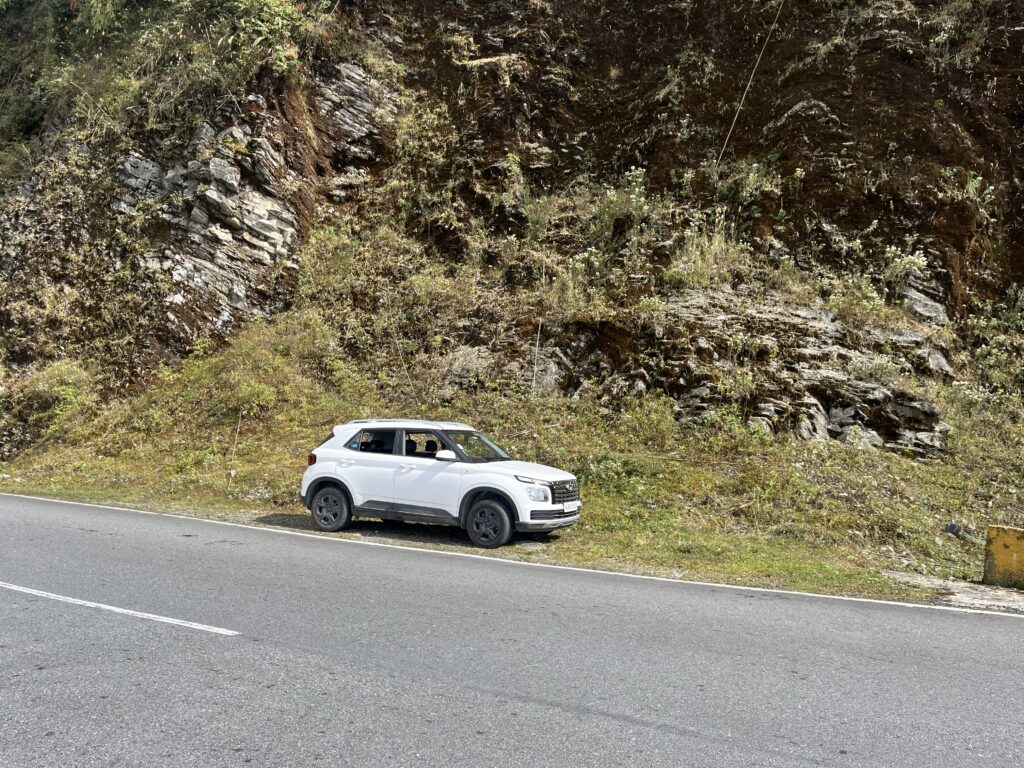
How to Drive Safely on Mountain Roads
1. Drive Smooth, Not Fast
Use gentle steering, gradual acceleration, and controlled braking. Sudden inputs reduce grip and confidence.
2. Use Lower Gears on Slopes
Use lower gears while climbing and descending. This gives better control and reduces pressure on brakes.
3. Stay in Your Lane
On turns and narrow roads, stay in your lane. Never cut corners.
4. Expect Sudden Changes
Road conditions can change quickly. Always drive with margin for error.
Drink and Drive or Mobile Use Is Extremely Dangerous
Never drink and drive in mountains.
Never use your mobile phone while driving.
Mountain roads need full concentration because situations can change suddenly:
- Blind turn traffic
- Falling stones
- Animals
- Unexpected potholes
- Oncoming buses taking wide turns
- Sudden fog or rain
One distraction can be enough.
Safe Distance from Heavy Vehicles
Keep distance from buses, trucks, and large vehicles.
Why:
- They may roll back slightly on climbs
- They need wider turning space
- They block your visibility ahead
- Loose debris or smoke may affect you
Do not rush behind them.
Many experienced heavy drivers will give you pass signals when they feel it is safe.
Be patient.
Overtaking on Mountain Roads – Correct Approach
Avoid overtaking unless it is clearly safe.
Never overtake:
- On curves
- Before blind turns
- On narrow bridges
- On steep climbs with no visibility
- In fog or rain
Only overtake when:
- Straight road ahead is clearly visible
- Enough space exists
- No oncoming traffic
- Road surface is stable
- You can complete it quickly and safely
Correct method:
- Keep safe distance behind vehicle
- Check ahead visibility
- Signal properly
- Accelerate smoothly and decisively
- Return to lane with safe margin
If unsure, do not overtake.
Parking Tips on Mountain Roads
Parking badly in hills can create danger.
Always:
- Park only in designated safe areas
- Avoid parking on blind turns
- Avoid narrow single-lane stretches
- Turn wheels toward safe side if parked on slope
- Use handbrake fully
- Put vehicle in gear / park mode
- Use wheel chocks if steep and available
If stopping for photos, choose proper lay-bys or open spaces.
Never stop in the middle of a narrow curve.
When 4×4 / AWD Is Useful
You do not need 4×4 for every mountain trip.
Normal cars can handle many hill stations in good weather.
4×4 or AWD helps when roads are:
- Snow-covered
- Icy
- Muddy
- Very steep and broken
- Off-road rural mountain tracks
- During monsoon in rough terrain
If roads are paved and dry, good driving matters more than 4×4.
How to Drive in Icy or Snowy Conditions
Icy roads are one of the most dangerous conditions.
Do:
- Drive very slowly
- Use highest possible smoothness in inputs
- Increase following distance greatly
- Use gentle braking
- Use lower gear downhill
- Clear windows fully before driving
Do not:
- Brake suddenly
- Accelerate hard
- Turn sharply
- Overtake unnecessarily
If tyres lose grip, stay calm and steer gently.
Winter tyres or chains may be needed in snow regions.
Rain and Fog Driving in Mountains
If visibility drops:
- Slow down immediately
- Use headlights/fog lamps
- Avoid overtaking
- Increase distance
- Stop safely if needed
Carry an umbrella because rain can arrive suddenly.
Best Time to Drive in Hills
Start early morning whenever possible.
Benefits:
- Better visibility
- Less traffic
- More daylight margin
- Easier parking
- Safer arrival before night
Avoid first-time mountain driving at night.
Common Mistakes to Avoid
- Overusing brakes downhill
- Driving too fast into turns
- Overtaking on curves
- Tailgating heavy vehicles
- Using phone while driving
- Drinking and driving
- Parking carelessly on slopes
- Ignoring weather warnings
Final Thoughts
Mountain driving rewards calm drivers, not aggressive ones.
Respect the road, keep patience, and make safe decisions. If you drive with control, mountain roads become one of the best parts of travel.